

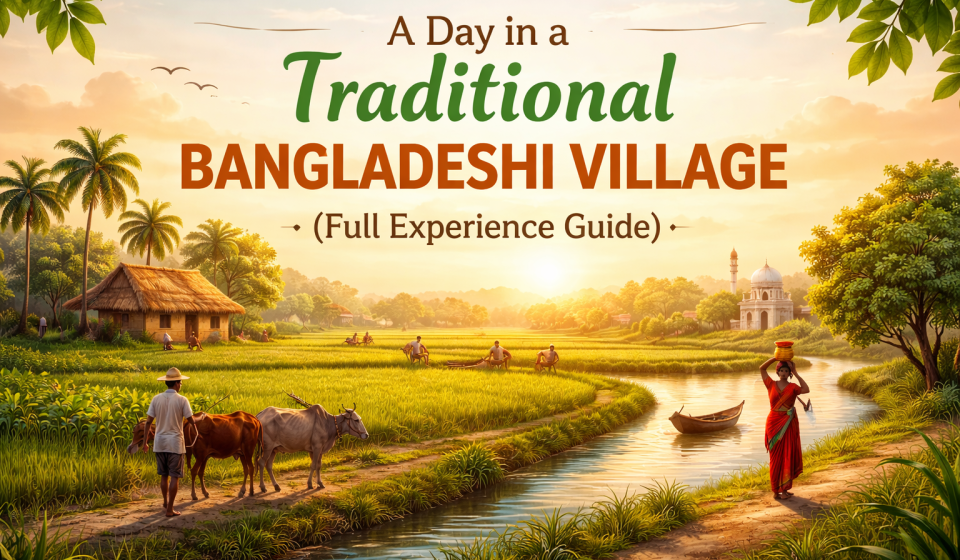

Introduction: The Soul of Rural Bangladesh
Bangladesh is often described as a land of rivers, green fields, and warm-hearted people. But to truly understand the country, you must step away from the busy streets of Dhaka and experience a traditional Bangladeshi village.
Village life in Bangladesh is not just about location — it is a lifestyle, a rhythm, and a culture shaped by nature, faith, and community bonding. Nearly 60% of Bangladesh’s population still lives in rural areas, where traditions are preserved and life moves at a slower, more meaningful pace.
In this complete guide, we will walk through an entire day in a traditional Bangladeshi village, from the first call of dawn to the peaceful silence of night.
🌅 Early Morning: The Village Awakens

4
5:00 AM – The Call of Dawn
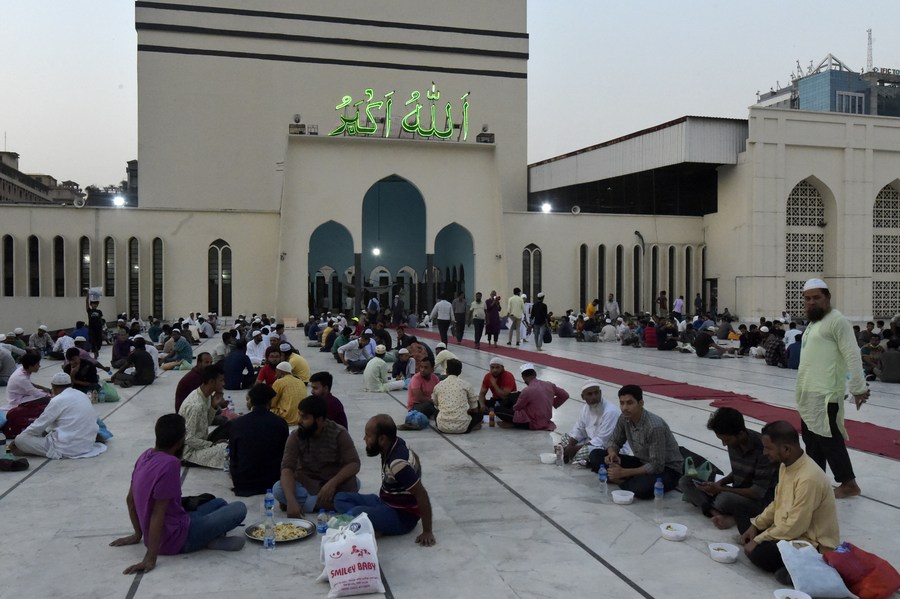
The day begins before the sun rises. The sound of the Fajr azan echoes softly from the village mosque. In a traditional Bangladeshi village, this sound acts as a natural alarm clock.
Men walk quietly toward the mosque. The air is cool and fresh. Mist floats above the paddy fields. Roosters crow from nearby courtyards.
Morning Atmosphere
- Dewdrops shine on green rice plants
- Cows begin to move in their sheds
- Birds sing from coconut and mango trees
- Smoke slowly rises from clay kitchens
The peacefulness of rural Bangladesh in the early morning is unmatched.
🧑🌾 6:00 AM – Farmers Head to the Fields
In village life in Bangladesh, agriculture is the backbone. Most families depend on farming.
Farmers eat a light breakfast — often Panta Bhat (fermented rice), green chili, and onion — before heading to the fields.
They carry:
- Plough tools
- Seeds
- Water containers
- Sometimes traditional sickles
During planting or harvest season, entire families may join the work.
Paddy Fields: The Green Gold
Bangladesh is famous for its rice production. In a traditional Bangladeshi village, paddy fields stretch endlessly like green oceans.
Working in the field involves:
- Preparing soil
- Planting rice seedlings
- Removing weeds
- Harvesting crops
It is physically demanding but deeply respected work.
🏡 8:00 AM – Village Homes & Family Life


4
Traditional village houses are simple but functional.
Types of Village Homes
- Mud houses
- Tin-shed houses
- Bamboo structures
- Brick houses (in developing villages)
Most homes have:
- A large courtyard
- Separate kitchen area
- Tube well for water
- Small garden with vegetables
Women’s Morning Routine
Village women play a central role in rural Bangladesh culture. Their morning includes:
- Sweeping courtyard
- Washing dishes
- Cooking rice and curry
- Feeding livestock
- Sending children to school
Life is busy but organized.
🎒 10:00 AM – Children Go to School
In a traditional Bangladeshi village, government primary schools are common.
Children walk together in groups wearing:
- Blue and white uniforms
- Sandals
- School bags
Village schools may have:
- Limited facilities
- Small classrooms
- Passionate teachers
Education is improving, but challenges still exist.
🌊 Noon: Life Around the River

4
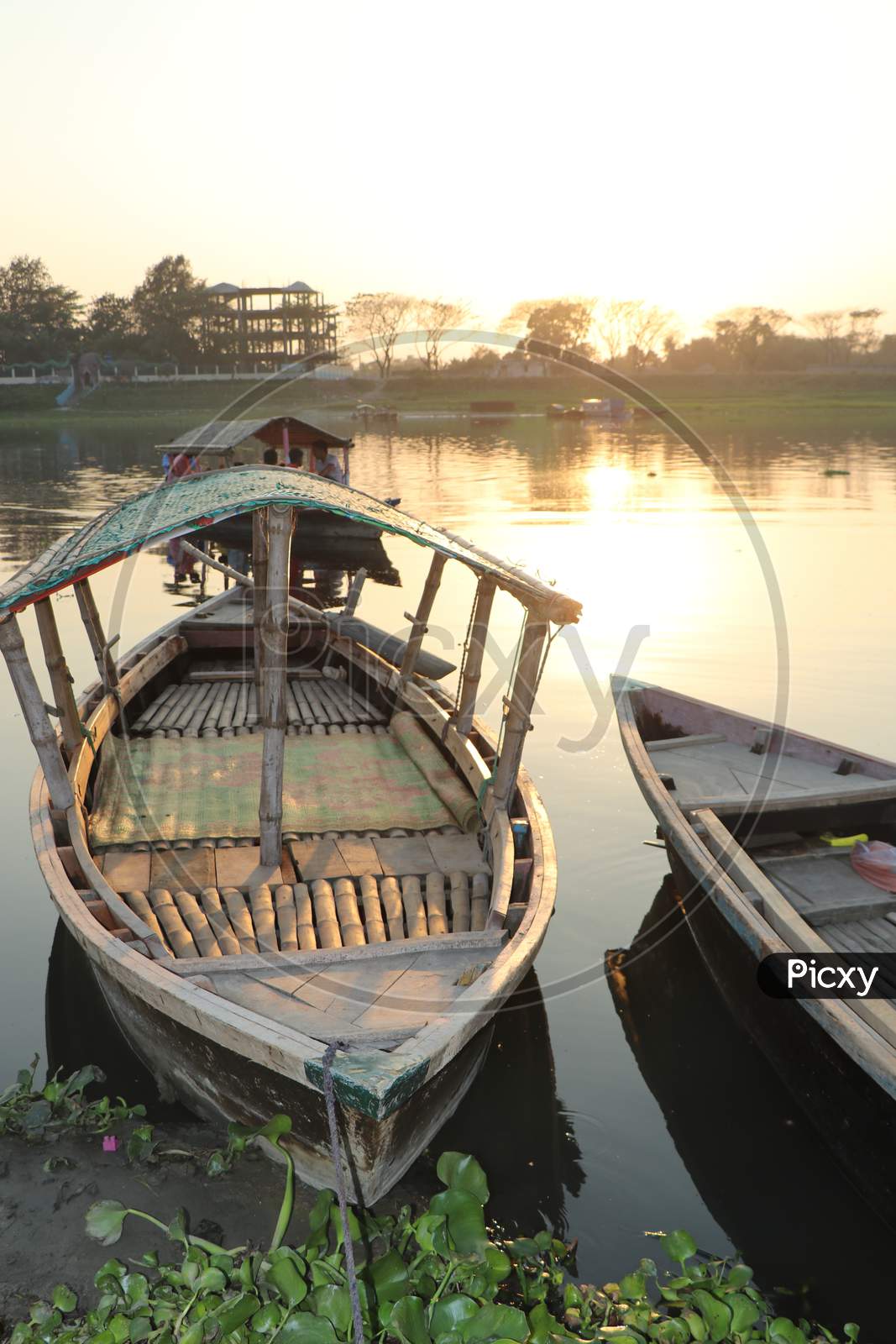
Rivers are the lifeline of rural Bangladesh.
At noon:
- Fishermen return with fresh fish
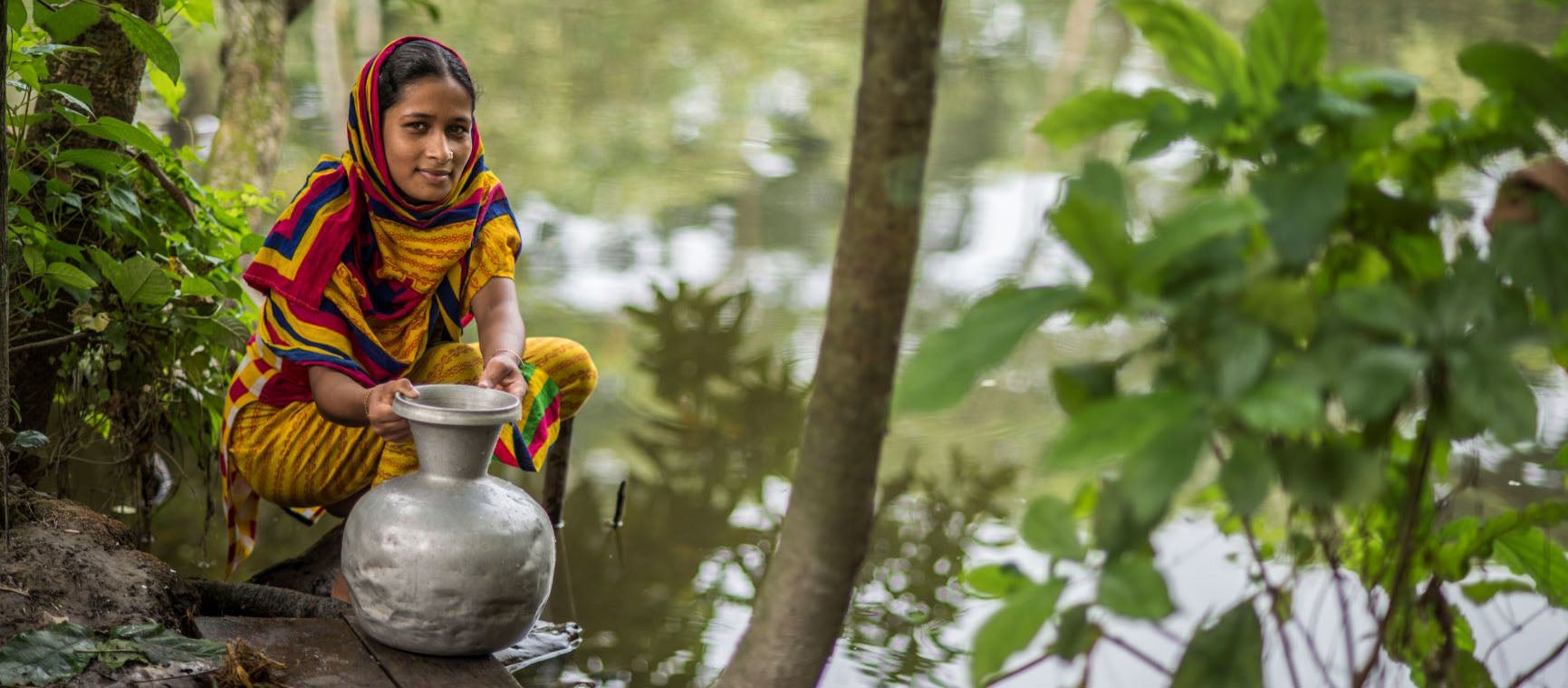
- Women wash clothes by the river
- Children swim in ponds
- Boats transport goods
Fishing is another major occupation in many villages.
Common fish include:
- Rui
- Katla
- Hilsa (seasonal)
River life defines the Bangladeshi village experience.
🍛 1:00 PM – Traditional Village Lunch
Lunch is the main meal of the day.
Typical rural meal:
- Steamed rice
- Lentils (Dal)
- Fried vegetables
- Fresh fish curry
- Green chili & onion
Food is simple but fresh and organic.
In many homes, family members sit on the floor to eat together. This strengthens family bonds.
💤 2:00 PM – Afternoon Rest
After lunch, village life slows down.
Farmers may rest under trees. Elderly people sit in the courtyard discussing:
- Weather
- Crops
- Village news
- Politics
Children play traditional games:
- Kanamachi
- Gollachut
- Cricket
Afternoon silence is part of the charm of rural Bangladesh culture.
🐄 4:00 PM – Livestock & Evening Activities
Cows and goats return from grazing fields.
Village boys bring cattle home. Women prepare evening snacks like:
- Puffed rice (Muri)
- Tea
- Fried snacks
Village tea stalls become active meeting points.
🕌 Sunset: Spiritual & Social Time


4
As the sun sets:
- Maghrib azan fills the air
- Sky turns golden-orange
- Farmers return home
Village sunsets are magical. The combination of open fields and soft light creates breathtaking views.
Men gather at tea stalls to discuss daily events.
🎉 Special Cultural Elements
Village life is deeply connected to festivals and traditions.
Popular celebrations include:
- Eid-ul-Fitr
- Eid-ul-Adha
- Pohela Boishakh
- Nabanna Festival
During festivals:
- Homes are decorated
- Special foods are prepared
- Traditional clothes are worn
- Community prayers are organized
These events highlight the richness of rural Bangladesh culture.
🌙 Night in a Traditional Bangladeshi Village
Night falls early in villages.
There are fewer street lights compared to cities.
You can hear:
- Crickets
- Frogs
- Soft wind through trees
Families gather for dinner and storytelling.
Some homes watch television. Others prefer conversation.
The sky is clearer than in cities. Stars are visible. The peaceful silence at night is one of the most beautiful parts of the Bangladeshi village experience.
❤️ Why Village Life Feels Different
A traditional Bangladeshi village offers:
- Strong community bonding
- Natural food
- Clean air
- Less stress
- Cultural richness
Unlike city life, villagers know each other personally.
If someone faces difficulty, the entire community helps.
📈 Modern Changes in Village Life
Village life in Bangladesh is changing:
- Internet access increasing
- Mobile banking available
- Solar electricity growing
- Roads improving
While development brings comfort, many fear losing traditional values.
The challenge is balancing modern progress with cultural preservation.
🧭 Travel Tips for Experiencing Village Life
If you want to experience a traditional Bangladeshi village:
- Visit during winter (November–February)
- Stay with a local family
- Respect cultural norms
- Dress modestly
- Participate in farming activities
The best way to understand rural Bangladesh is by living it, not just observing it.
Conclusion: The Heartbeat of Bangladesh
A day in a traditional Bangladeshi village is simple yet meaningful.
From sunrise azan to peaceful starlit nights, every moment reflects harmony between humans and nature.
Village life in Bangladesh teaches:
- Patience
- Gratitude
- Community spirit
- Simplicity
In a fast-moving digital world, rural Bangladesh remains a reminder that happiness does not always require luxury — sometimes it grows quietly in green paddy fields.