
How Nabanna Is Celebrated in Rural Bangladesh – Traditions, Food, Culture & Harvest Festival Guide

🌾 How Nabanna Is Celebrated in Rural Bangladesh
Introduction: The Festival of New Rice
In the heart of rural Bangladesh, when the golden paddy fields bend under the weight of ripe rice and the air carries the sweet scent of harvest, villages come alive with joy. This is the season of Nabanna — the traditional harvest festival that celebrates the arrival of new rice.
Nabanna, which literally means “new food,” is one of the most beautiful rural festivals in Bangladesh. Deeply rooted in agricultural life, this celebration is not just about food; it is about gratitude, community bonding, culture, and tradition.
In this article, we will explore how Nabanna is celebrated in rural Bangladesh — from the harvesting of paddy to the cooking of traditional dishes, from folk songs to village fairs.


4
What Is Nabanna?
Nabanna is a traditional Bengali harvest festival celebrated mainly in the month of Agrahayan (November–December). It marks the harvesting of Aman rice, the main rice crop of Bangladesh.
In rural areas, agriculture is the backbone of life. Farmers work for months in muddy fields under the sun and rain. When the harvest season finally arrives, Nabanna becomes a moment of happiness and relief.
It is not just a festival — it is a celebration of survival, hard work, and gratitude to nature.
The Beginning: Harvesting the Golden Paddy

4
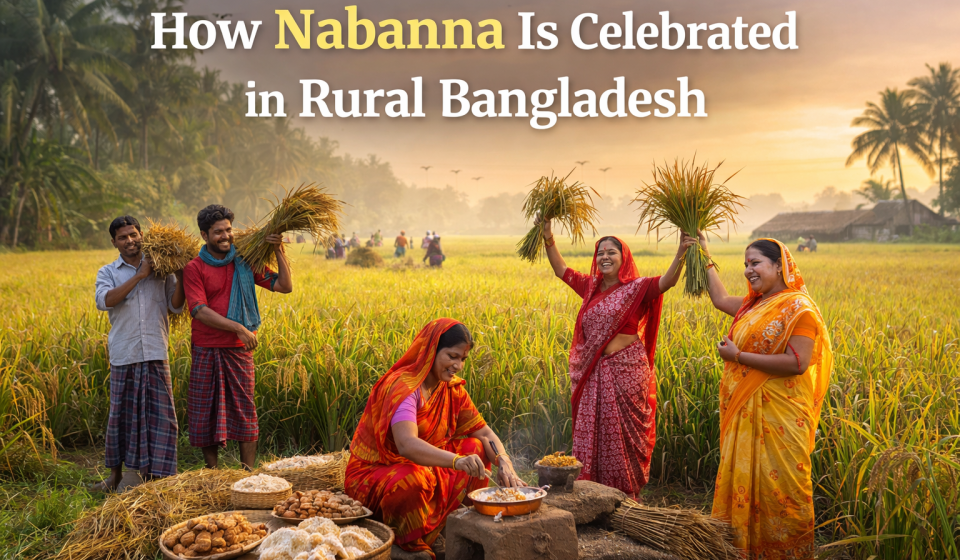
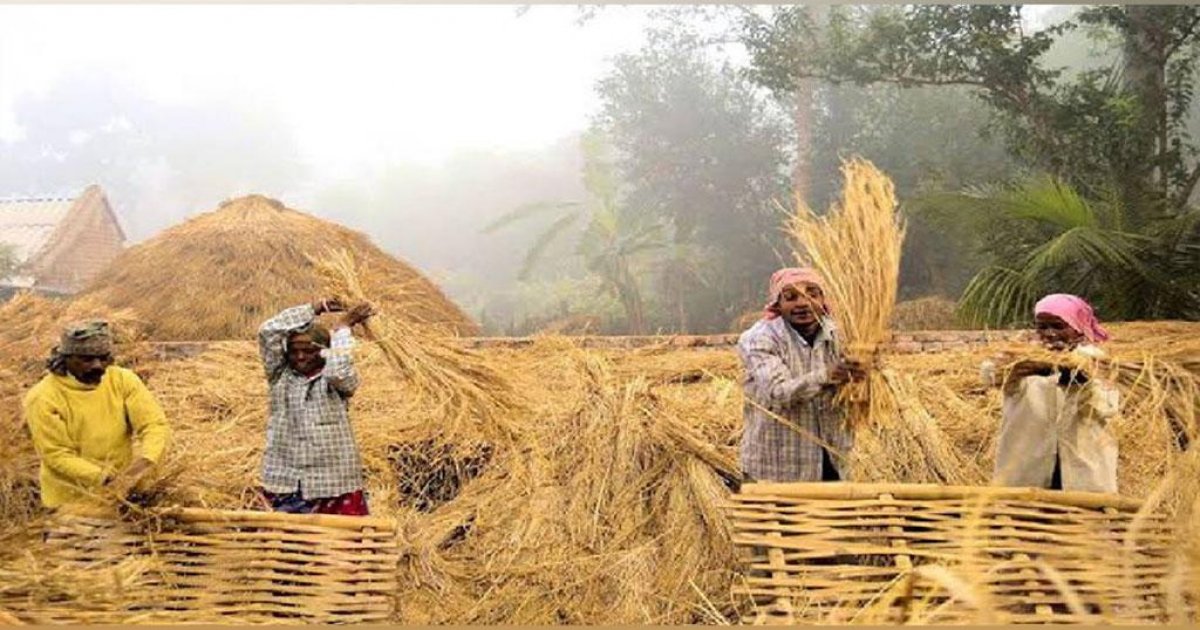
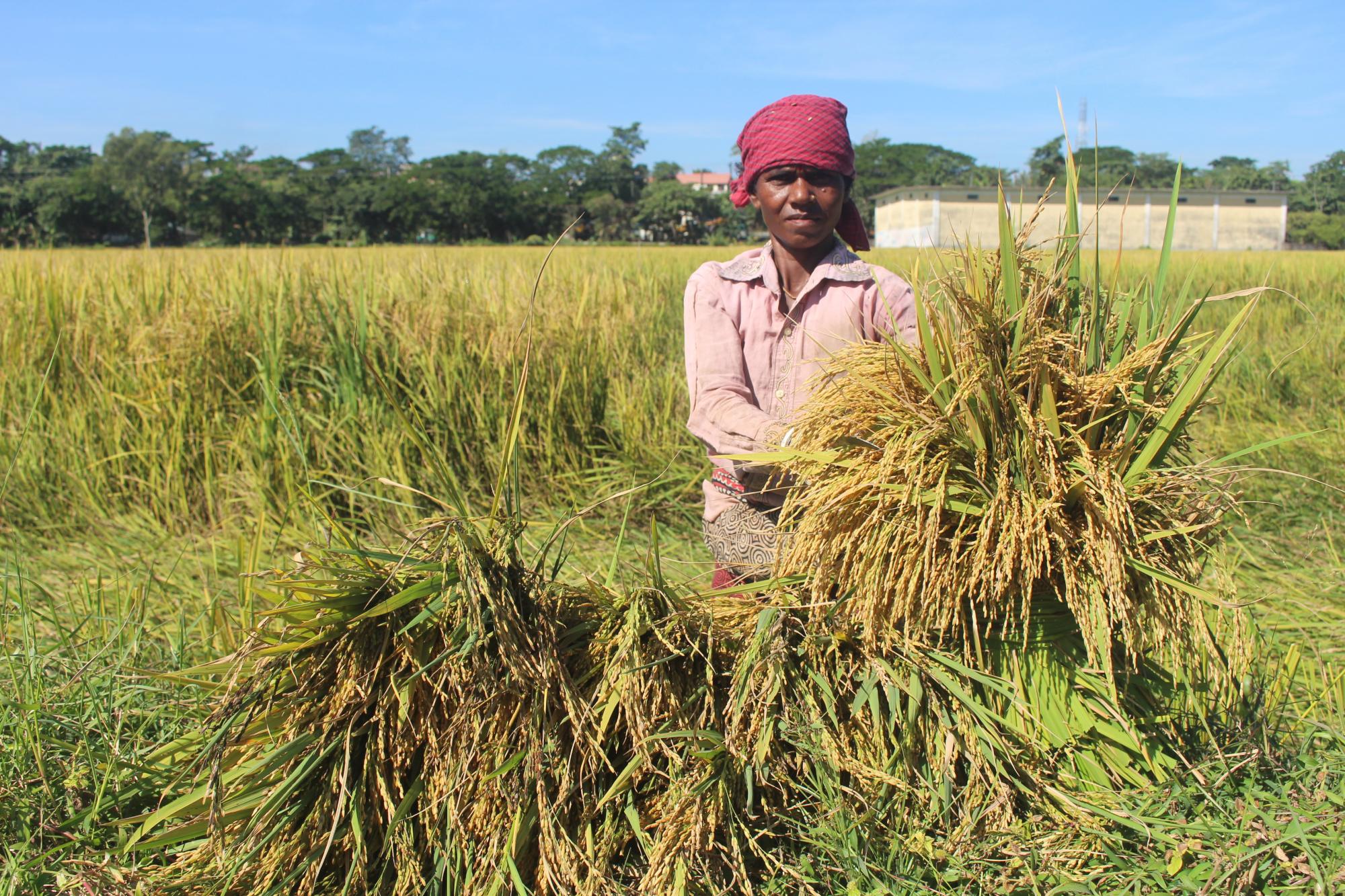
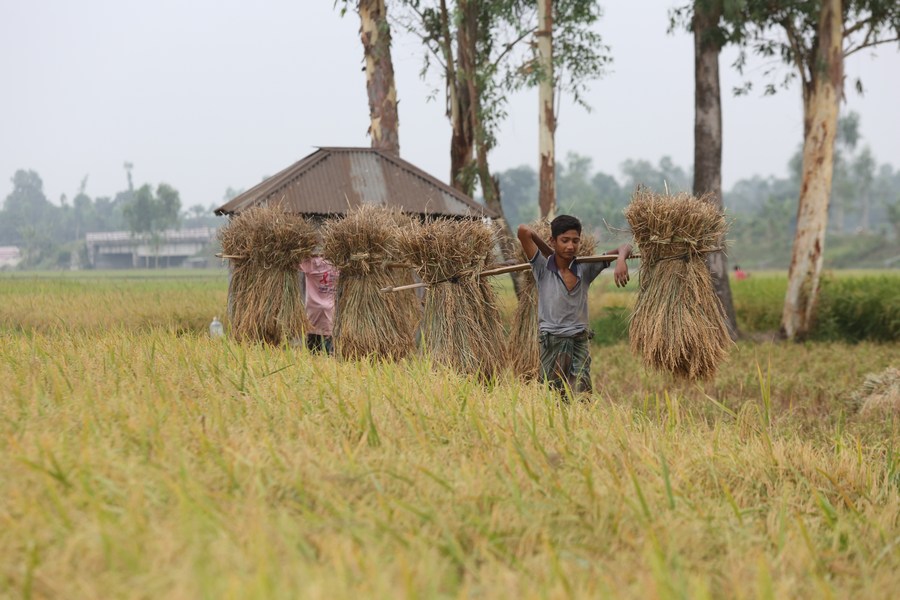
The celebration begins in the fields.
During early morning, farmers gather with sickles in hand. Families often join together to cut the ripe paddy. It is a joyful scene:
- Men cutting rice
- Women tying bundles
- Children running in the fields
- Laughter echoing across the land
The golden fields create a magical atmosphere. After months of hard labor, this moment feels like a reward.
In many villages, farmers bring the first harvested rice home with special respect. Some families offer prayers before bringing the new crop into the house.
Bringing the New Rice Home
The first rice harvested is treated as sacred. In some villages:
- Rice is placed in the prayer room
- Elders offer dua (prayers)
- Some families recite religious verses
- Gratitude is expressed to Allah for a good harvest
This spiritual aspect is very important in rural Bangladesh. People believe the harvest is a blessing, and it must be welcomed with humility.
Traditional Nabanna Foods
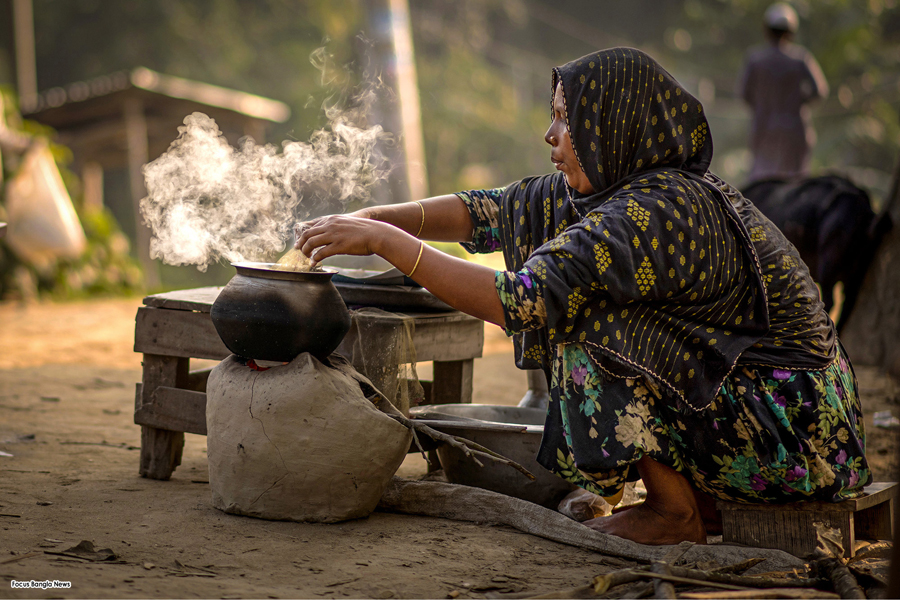
Food is the heart of Nabanna.


4
1. Pitha (Rice Cakes)
The most important Nabanna food is pitha, made from freshly harvested rice.
Popular types include:
- Bhapa Pitha
- Patisapta
- Chitoi Pitha
- Nakshi Pitha
Village women gather together to prepare pitha. The entire courtyard smells of fresh rice flour and date palm jaggery (khejur gur).
2. Panta Bhat
Fresh rice is sometimes soaked overnight to make panta bhat. It is eaten with:
- Green chili
- Onion
- Fried fish
- Mashed vegetables
3. Payesh (Rice Pudding)
New rice is used to prepare sweet payesh with milk and sugar or jaggery. This dish is often served to guests.
Community Bonding & Sharing Food
One of the most beautiful parts of Nabanna is sharing.
In villages:
- Neighbors exchange pitha
- Families invite relatives
- Poor families receive food from others
- Everyone eats together
This strengthens social bonds. In rural culture, food is not just nourishment — it is connection.
Village Cultural Programs


4
In some areas, Nabanna is celebrated with cultural programs:
- Folk songs
- Baul music
- Traditional dance
- Recitations
- Village drama
Young boys and girls perform in school fields or open grounds. Elderly villagers gather to watch.
These programs preserve rural heritage and traditional art forms.
Nabanna Mela (Village Fair)
Some villages organize a small fair called Nabanna Mela.
At the fair you can find:
- Handmade crafts
- Wooden toys
- Clay pots
- Local sweets
- Traditional snacks
Children eagerly wait for this fair. It brings excitement and color to simple village life.
The Role of Women in Nabanna
Women play a central role in the festival.
They:
- Prepare rice flour
- Cook pitha
- Decorate courtyards
- Organize family gatherings
- Teach children traditional recipes
Nabanna is also a celebration of rural women’s skills and hard work.
Seasonal Beauty During Nabanna
Nabanna happens in late autumn.
The village scenery becomes magical:
- Clear blue skies
- Cool breeze
- Golden rice fields
- Date palm trees ready for sap collection
The natural beauty adds to the festive mood.
Nabanna in Different Regions of Bangladesh
While Nabanna is mainly celebrated in rural areas, different regions have slight variations:
- In northern districts, large community events are common.
- In southern areas, river-side villages celebrate with fish feasts.
- In central regions, school-based cultural events are popular.
Despite differences, the core spirit remains the same — celebration of new rice.
Religious and Cultural Harmony
Nabanna is primarily cultural, not religious.
Both Muslim and Hindu communities celebrate harvest season with joy. In Hindu-majority villages, Lakshmi Puja may be associated with harvest blessings.
This shows the harmony and unity in rural Bangladesh.
Economic Importance of Nabanna
Nabanna is also important economically.
After harvest:
- Farmers sell surplus rice
- Local markets become active
- Rural economy improves
- Loan repayments are made
Harvest season brings financial relief to many families.
Nabanna in Modern Times
Today, things are slowly changing.
Modern machinery is replacing manual harvesting. Young people are moving to cities. However, in most villages, Nabanna still holds strong emotional value.
Some schools and cultural organizations in cities now celebrate Nabanna to preserve tradition.
But the real beauty of Nabanna can only be felt in rural Bangladesh.
Why Nabanna Matters
Nabanna represents:
- Gratitude
- Community
- Hard work
- Cultural identity
- Rural pride
It reminds people of their roots.
In a world of smartphones and fast life, Nabanna connects Bangladeshis to nature and soil.
A Personal Reflection
If you ever visit a Bangladeshi village during harvest season, you will see something magical.
You will hear:
- The sound of sickles cutting rice
- The laughter of children
- The rhythm of folk songs
You will smell:
- Fresh rice
- Date palm jaggery
- Clay oven smoke
And you will feel peace.
Conclusion
Nabanna is more than a harvest festival — it is the heartbeat of rural Bangladesh.
It celebrates the bond between humans and land, between neighbors and families, between tradition and modern life.
While cities grow and technology advances, Nabanna continues to remind us of our agricultural roots and cultural richness.
If you truly want to understand Bangladesh, visit a village during Nabanna. Only then will you experience the real soul of the country.